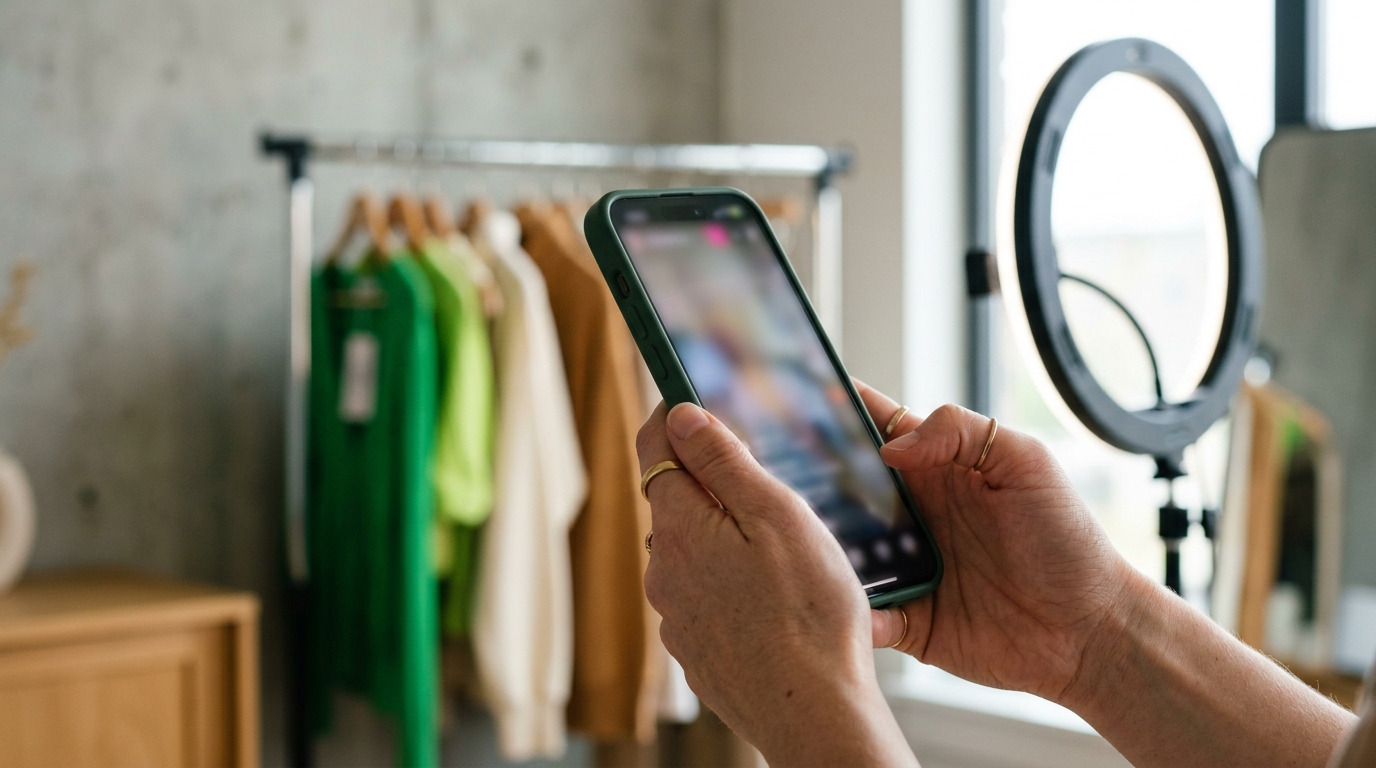
Social commerce combines social media platforms with ecommerce functionalities, allowing users to discover and purchase products directly within their social media experience. In 2026, this integration is a critical sales channel for small businesses, turning passive scrolling into active shopping.
What is Social Commerce and Why It Matters in 2026
Social commerce isn't just about placing ads on social media; it's about making the entire shopping journey, from discovery to checkout, seamless and native to the platform. Instead of clicking a link that takes them to your Shopify or BigCommerce store, a customer can see a product on Instagram, tap to view details, and purchase it without ever leaving the app. This friction-free process significantly boosts conversion rates by capturing impulse buys and reducing cart abandonment.
The numbers speak for themselves. Global social commerce sales are projected to exceed $2 trillion in 2026. For a small business owner, this isn't a trend to watch—it's a primary revenue stream to build. Platforms like Instagram, TikTok, and Pinterest have evolved from marketing channels into full-fledged storefronts, complete with integrated payment systems and inventory management tools.
The Core Benefit: Reducing Purchase Friction
The traditional ecommerce funnel requires multiple steps:
- User sees an ad or post on social media.
- User clicks the ad, leaving the social app.
- User lands on a product page on your website.
- User adds the item to their cart.
- User navigates to the checkout page.
- User fills out shipping and payment information.
- User completes the purchase.
At any of these steps, you can lose the customer. Social commerce condenses this process into as few as two or three taps within a single app, leveraging saved payment and shipping information. This convenience is what modern consumers expect.
Top Social Commerce Platforms for Small Businesses
While nearly every platform has some form of shopping integration, three stand out for their robust features and engaged user bases. Choosing the right platform depends on your target audience and product type.
- Instagram Shopping: Ideal for visually driven brands in fashion, beauty, home decor, and food. Features like Product Tags in posts, Stories, and Reels allow you to tag items from your catalog directly in your content. The in-app checkout feature, available in select regions, creates a completely native shopping experience. Its integration with Facebook Shops provides a centralized catalog management system.
- TikTok Shop: The leader in viral, short-form video content. TikTok Shop allows businesses to integrate their products directly into videos through shoppable links and a dedicated "Shop" tab on their profile. The platform's algorithm excels at putting products in front of highly engaged, trend-driven audiences, making it a powerhouse for impulse purchases and viral product marketing.
- Pinterest Shopping: Pinterest functions as a visual discovery engine, with users actively looking for ideas and products to buy. Shoppable Pins and Shop the Look Pins let users purchase items they see in a Pin. Pinterest's audience has high purchase intent, making it perfect for brands in the DIY, home goods, wedding, and recipe niches.
5 Essential Strategies for Shoppable Content
Creating shoppable content is more than just tagging products. It's about building a narrative that makes your product irresistible. Here are five strategies to implement in 2026.
1. Master User-Generated Content (UGC)
Modern shoppers trust other shoppers far more than they trust brands. Encourage customers to post photos and videos with your products using a specific hashtag. You can then feature this UGC on your feed, tagging the products shown. Platforms like Yotpo or Loox can help you collect and manage this content. This provides social proof and authentic context for your products, which a 2025 study by the Retail Marketing Association found to increase conversion rates by up to 15%.
2. Leverage Live Shopping Events
Live shopping combines the engagement of a livestream with the instant gratification of ecommerce. Host live events on Instagram Live or TikTok LIVE to demo new products, run a Q&A session, or offer exclusive, time-sensitive discounts. During the stream, you can feature products and viewers can purchase them in real-time. This creates a sense of urgency and community, driving significant sales in a short period.
3. Create "How-To" and Tutorial Videos
Shoppable video is the cornerstone of social commerce. Go beyond static product shots. Create short, engaging tutorials showing your product in action.
- Clothing Brand: Style one dress in three different ways.
- Skincare Company: Show a complete morning routine using your products.
- Kitchenware Store: Film a quick recipe using your featured gadget.
4. Collaborate with Influencers and Creators
Partnering with influencers who align with your brand is a powerful way to reach new audiences. But don't just have them post a pretty picture. The best collaborations involve creators integrating your product into their authentic content. For example, have them host a live shopping event on their channel or create a tutorial video. Platforms like Meta's Creator Marketplace and the TikTok Creator Marketplace simplify the process of finding and collaborating with vetted partners.
5. Integrate Your Ecommerce Platform Seamlessly
To succeed in social commerce, your backend needs to be in order. Your ecommerce platform (Shopify, BigCommerce, WooCommerce) must be properly integrated with your chosen social channels. This ensures your product catalog, inventory levels, and pricing are always in sync.
- Shopify: Offers deep, native integrations with Facebook/Instagram Shops, TikTok, and Pinterest, making it simple to manage your product feed directly from your Shopify admin.
- BigCommerce: Features a robust Channel Manager tool that allows for multi-channel selling and streamlined management across social platforms.
- WooCommerce: Provides flexibility through extensions like the Facebook for WooCommerce plugin, allowing you to connect your store and sync products.
Social Commerce vs. Traditional Ecommerce: Key Differences
Feature Social Commerce Traditional Ecommerce Point of Discovery Passive, within social feed (entertainment-first) Active, via search engine or direct navigation (intent-driven) Customer Journey Condensed, often 2-3 taps within one app Multi-step, involves leaving the initial platform for a website Primary Driver Community, social proof, and impulse Search intent, price comparison, and brand reputation Content Focus Video, UGC, live streams, authentic stories High-resolution product photos, detailed descriptions, reviews Interaction Model Two-way conversation (comments, DMs, shares) One-way broadcast (brand to consumer)As a small business owner, your goal isn't to choose one over the other. It's to build a cohesive strategy where your traditional ecommerce website and your social commerce channels work together to meet customers wherever they are.
What is shoppable content?
Shoppable content is any form of digital content—such as an image, video, or live stream—that allows viewers to directly purchase the products featured within it. This is typically enabled through clickable tags or links that open a product detail page or add the item to a cart, often without leaving the social media app.
How do I set up a shop on Instagram?
To set up Instagram Shopping, you need a business or creator account and an eligible product. You must connect your account to a Facebook Page and a product catalog, which can be created using Facebook's Commerce Manager or by integrating a supported ecommerce platform like Shopify or BigCommerce. Once approved, you can enable Shopping features and start tagging products in your posts and stories.
Is social commerce better than having a website?
Social commerce is not a replacement for a dedicated ecommerce website; it's a powerful extension of it. Your website serves as your central brand hub, data collection point, and a destination for high-intent buyers. Social commerce excels at capturing new customers through discovery and impulse buys. A strong strategy uses both channels in tandem.