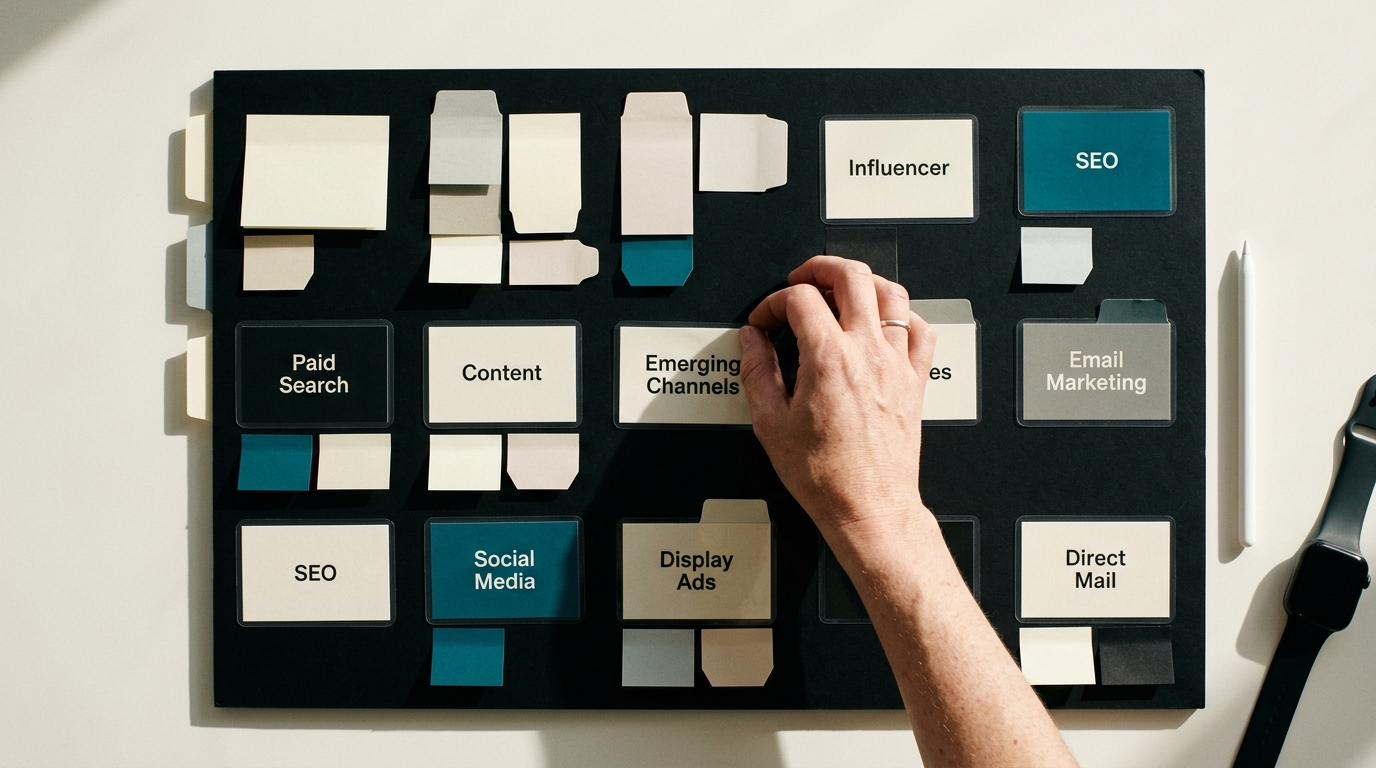
How High-Growth Companies Allocate Marketing Budgets in 2026
In 2026, high-growth companies allocate 40-50% of their marketing budgets to performance marketing channels like PPC and paid social, 20-30% to long-term SEO and content, and 20-30% to brand building and experimentation. This data-driven approach, powered by predictive analytics, prioritizes channels with the highest measurable return on investment (ROI) while investing in future growth.
For small business owners, understanding where to put your marketing dollars is one of the most critical decisions you'll make. The digital landscape is more complex than ever, and a "spray and pray" approach is a surefire way to waste resources. By analyzing the spending habits of companies that are rapidly scaling, we can uncover a blueprint for smart, effective marketing budget allocation.
This analysis, based on a meta-analysis of 2025 and early 2026 industry reports, dives into the methodologies and data inputs that fuel successful marketing forecasting and budget allocation.
The Modern Marketing Budget: A Three-Pillar Framework
High-growth businesses don't just spend more; they spend smarter. They view their marketing budget not as a single lump sum, but as a portfolio of investments spread across three core pillars: Performance, Foundation, and Innovation.
- Pillar 1: Performance & Acquisition (40-50%): This is the engine of immediate growth. These are channels with highly predictable returns and clear attribution. The goal here is direct response: clicks, leads, and sales.
- Pillar 2: Foundation & Brand (20-30%): This is the investment in long-term, sustainable growth. These activities build brand equity, organic traffic, and customer trust over time. Their ROI is less immediate but compounds significantly.
- Pillar 3: Innovation & Experimentation (20-30%): This is the R&D department of marketing. High-growth companies know that the channels that work today might not work tomorrow. This budget is for testing new platforms, strategies, and technologies to find the next big growth lever.
Channel-Specific Allocations for High-Growth Ecommerce Brands in 2026
Let's break down how this framework translates into specific channel allocations. While exact percentages vary by industry, a typical high-growth direct-to-consumer (DTC) brand on platforms like Shopify or BigCommerce follows this model:
- Paid Search (PPC): 20-25%. Google Ads, particularly Performance Max and Shopping campaigns, remains the top allocation. With advanced AI-driven bidding strategies, it provides the most direct path to purchase for high-intent customers.
- Paid Social: 15-20%. Platforms like TikTok, Instagram, and YouTube are key for top-of-funnel awareness and retargeting. A 2025 study by the Digital Marketing Institute confirmed that video ad spend on these platforms delivers 1.5x the engagement of static ads.
- SEO & Content Marketing: 20-30%. This is the most significant investment in foundational growth. It includes technical SEO, on-page optimization, and creating valuable content (blogs, guides, videos) that attracts organic traffic. This allocation has increased by nearly 5% since 2024 as brands seek to reduce their reliance on ever-more-expensive paid channels.
- Email & Retention Marketing: 5-10%. The focus here is on maximizing Lifetime Value (LTV). This budget covers marketing automation platforms (e.g., Klaviyo), loyalty programs, and personalized communication to drive repeat purchases.
- Affiliate & Influencer Marketing: 5-10%. Leveraging trusted voices continues to be a powerful strategy. Budgets are shifting from mega-influencers to micro-influencers, who offer higher engagement rates and more authentic connections.
- Emerging Channels & Creative Testing: 5-10%. This is the "innovation" slice. In 2026, this includes experimenting with conversational AI commerce, augmented reality (AR) shopping experiences, and advertising on new streaming platforms.
Forecasting Your Marketing Budget: From Educated Guess to Data Science
High-growth companies don't guess; they forecast. They use predictive marketing analytics to model future outcomes based on historical data and market trends. Here’s a comparison of the old way versus the new way.
Marketing Forecasting: Traditional vs. Modern Methods
Factor Traditional Method (Pre-2023) Modern Method (2026) Primary Input Last year's budget + flat percentage increase (e.g., +10%). Multi-touch attribution data, customer LTV, market seasonality, competitor spend models. Core Metric Cost Per Acquisition (CPA). Return on Ad Spend (ROAS) modeled against Customer Lifetime Value (LTV:CAC ratio). Technology Used Spreadsheets (e.g., Microsoft Excel). Predictive analytics platforms (e.g., HubSpot's Forecasting), BI tools (e.g., Tableau), and AI-powered SEO forecasting tools. Frequency Annual or semi-annual planning. Quarterly planning with monthly or even weekly budget adjustments based on real-time performance data. SEO Forecasting Based on target keyword volume and desired ranking. Based on SERP feature analysis, click-through-rate (CTR) curves for specific positions, and topic cluster potential.How to Apply This to Your Small Business
You don't need a team of data scientists to start making smarter budget decisions. Here are three actionable steps:
- Establish a "Single Source of Truth." Your first step is to get your data in order. Use a tool like Google Analytics 4 (GA4) and ensure your conversion tracking is set up perfectly across all channels. This data is the foundation of all future forecasting.
- Calculate Your LTV:CAC Ratio. Understand your Customer Lifetime Value (LTV) and your Customer Acquisition Cost (CAC). A healthy ratio for a growing business is at least 3:1 (the value of a customer is three times the cost to acquire them). This single metric will tell you how much you can afford to spend to acquire a new customer.
- Start with a 70/20/10 Model. If the full framework feels too complex, start simpler. Allocate 70% of your budget to what you know works (e.g., Google Ads). Put 20% into expanding proven channels or strategies (e.g., adding YouTube ads to your Google campaigns). Use the final 10% to experiment with something entirely new (e.g., a TikTok campaign). As you gather data, you can evolve toward the more balanced 40/30/30 split.
The core lesson from high-growth companies in 2026 is agility. Budgets are no longer static annual plans but dynamic, data-informed portfolios that are constantly being optimized. By adopting this mindset and focusing on data, any small business can allocate its marketing budget more effectively to fuel sustainable, long-term growth.
Marketing Forecasting FAQ
What percentage of revenue should a small business spend on marketing in 2026?
In 2026, the generally accepted benchmark is for small businesses (under $5 million in revenue) to allocate 7-12% of their total revenue to marketing. High-growth companies aiming for aggressive expansion often push this figure to 15-25%, especially if they are in a competitive market or launching new products.
How does SEO forecasting work?
Modern SEO forecasting uses data to predict future organic traffic and revenue. It works by analyzing your current keyword rankings, estimating the click-through rate (CTR) for target positions, factoring in keyword search volume, and projecting the traffic increase from achieving higher rankings. Tools then multiply this projected traffic by your site's average conversion rate and average order value to forecast potential revenue.
What is predictive marketing analytics?
Predictive marketing analytics uses historical data, statistical algorithms, and machine learning techniques to predict future marketing outcomes. It helps businesses answer questions like "Which customers are most likely to churn?", "What is the optimal budget for our next PPC campaign?", and "Which products will be most popular next quarter?" It moves marketing from a reactive to a proactive discipline.