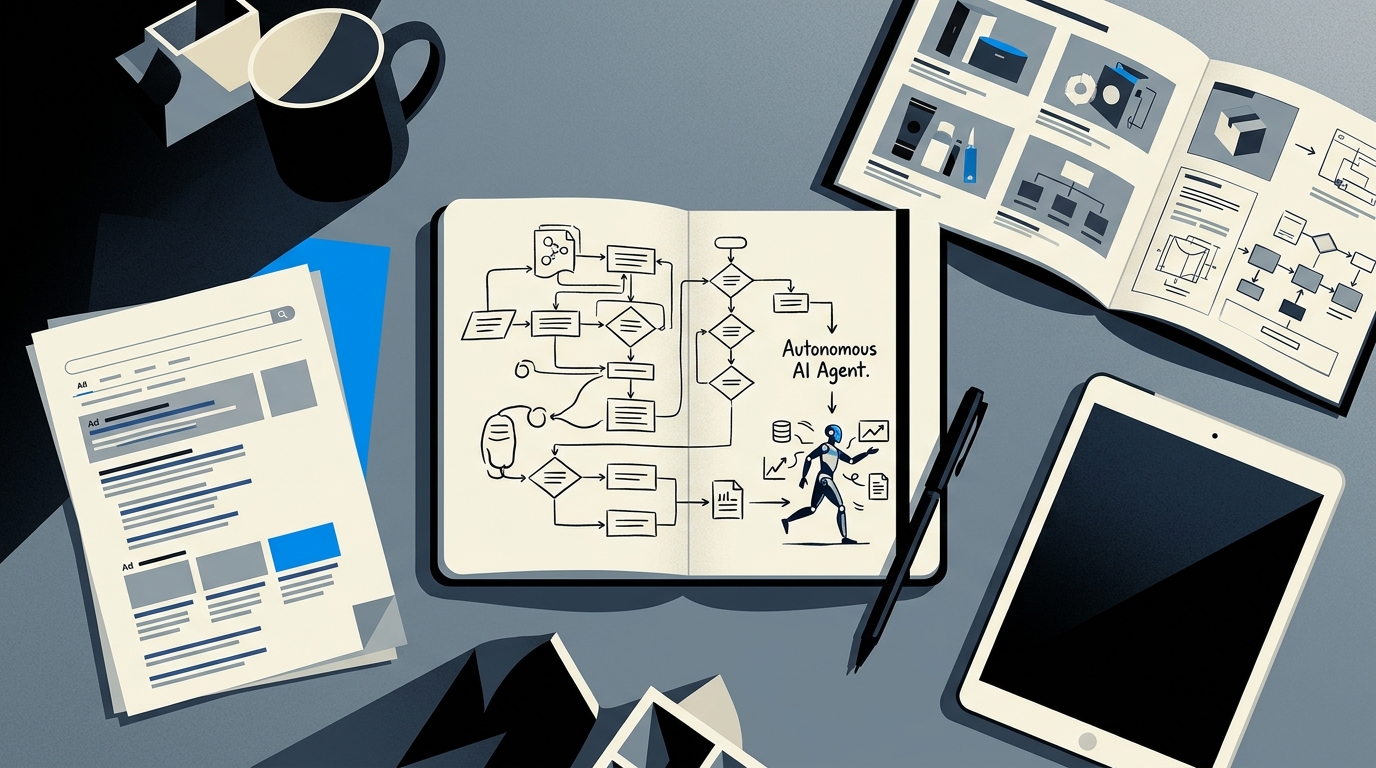
Specialized AI agents transform PPC campaign management by automating complex tasks like keyword research, bid optimization, ad creative generation, and performance analysis with greater precision than generalist models. These agents autonomously execute multi-step workflows, allowing businesses to manage campaigns at a scale and efficiency previously unattainable.
The Shift from General AI to Specialized Agents in Marketing
For the past few years, tools like ChatGPT and Google Gemini have been invaluable for brainstorming and content creation. However, their broad, generalist nature requires constant human prompting and oversight for specific, data-driven tasks like managing a pay-per-click (PPC) advertising budget. The true evolution in 2026 is the rise of the specialized AI agent for marketing.
What's the difference? A general AI like ChatGPT is a conversational partner; you give it a prompt, it gives you a response. An AI agent is an autonomous worker. You give it a high-level goal—for example, "increase return on ad spend (ROAS) for my Google Ads 'Summer Sale' campaign"—and it independently executes a series of tasks to achieve it. It can analyze data, make decisions, and take actions within connected platforms like Google Ads or Microsoft Advertising without step-by-step human intervention.
For small business owners, this means shifting from being a hands-on operator to a strategic manager of a digital workforce. You set the goals, and your AI agents do the legwork.
5 AI Agents Revolutionizing Ad Management Workflows
While many all-in-one platforms exist, the most effective strategies often involve a "stack" of specialized agents, each excelling at a specific part of the PPC lifecycle. Here are five types of agents and real-world examples of how they automate ad management.
1. The Keyword Strategist Agent
This AI agent automates the entire keyword research and organization process. It goes far beyond simple keyword generation by analyzing search intent, competitive density, and historical performance data to build campaign structures that are optimized from day one.
- Core Function: Connects to your Google Ads account, Google Search Console, and competitor analysis tools (like Semrush or Ahrefs).
- Autonomous Workflow:
- Identifies high-intent "money" keywords your competitors are ranking for but you aren't targeting.
- Analyzes your own Search Console data to find "striking distance" keywords you could easily rank for with a paid boost.
- Automatically groups thousands of keywords into tightly themed ad groups based on semantic relevance, a task that once took days.
- Generates negative keyword lists by identifying irrelevant search queries that triggered your ads in the past.
- Example Tool: Look for platforms like KeywordFlow AI or AdStructure Pro.
2. The Bid Optimizer Agent
While Google's own Smart Bidding is powerful, a dedicated bid optimizer agent can layer on additional business data for more profitable decisions. It acts as a financial controller for your ad spend, making micro-adjustments 24/7.
- Core Function: Integrates with your ad platforms and your ecommerce backend (e.g., Shopify, BigCommerce).
- Autonomous Workflow:
- Pulls real-time product margin data from your Shopify store.
- Adjusts bids based on profitability, not just conversion value. For instance, it will bid more aggressively for a high-margin product than a low-margin one, even if their sale price is the same.
- Analyzes hourly conversion trends and reallocates budget to the most profitable times of day.
- Reduces bids on keywords that are driving clicks but have a below-average conversion rate and poor ROAS over the last 14 days.
- Example Tool: Platforms like PPC-Optimus and MarginMax AI specialize in this.
3. The Creative Generation & Testing Agent
Generative AI now does more than write a single headline. This agent creates entire ad creative variants—including text, images, and even short video snippets—and then systematically tests them to find the winning combination.
- Core Function: Connects to your ad platforms, your product catalog, and generative AI models like Midjourney v8 or Runway Gen-3.
- Autonomous Workflow:
- Scans your product pages to extract key features and benefits.
- Generates 10 different headline variations and 5 description variations for each ad group.
- Creates lifestyle images by placing your product photos into new, AI-generated scenes relevant to your target audience.
- Launches A/B tests on all creative variants, automatically pausing the underperforming ads after they reach statistical significance (e.g., 1,000 impressions).
- Promotes the winning creative and uses its attributes to inform the next generation of ads.
- Example Tool: AdCreative.ai and Persado have led this space for years.
4. The Anomaly Detection Agent
How often have you checked your ad account to find that a broken URL or a sudden spike in cost-per-click (CPC) has wasted hundreds of dollars? This agent is your 24/7 account monitor, alerting you to problems before they become catastrophes.
- Core Function: Constantly monitors your ad account's key performance indicators (KPIs).
- Autonomous Workflow:
- Scans all landing page URLs every hour to check for 404 errors or slow load times. If an error is found, it automatically pauses the affected ads and sends you an alert.
- Monitors daily spend and sends an alert if it's projected to exceed your budget by more than 10%.
- Identifies sudden drops in conversion rate or click-through rate (CTR) that could indicate tracking issues or broken site functionality.
- Flags ad groups with a sudden, unexplainable spike in CPC, suggesting potential new competitor activity.
- Example Tool: Many larger management suites like Optmyzr include this functionality, sometimes called "Account Audits."
5. The SEO-PPC Synergy Agent
This is one of the most advanced uses of SEO automation AI. This agent bridges the gap between your paid and organic marketing efforts, ensuring they work together to maximize traffic and minimize cost.
- Core Function: Integrates Google Ads, Google Search Console, and an SEO rank tracker.
- Autonomous Workflow:
- Identifies keywords where you hold the #1 organic ranking and automatically reduces the corresponding PPC bid to an "audience maintenance" level, saving money. A 2025 study from BrightEdge confirmed that having both the top organic and top paid result yields diminishing returns on clicks.
- Finds high-converting keywords from your PPC campaigns that you don't rank for organically on page one.
- It then exports this list and sends it to your content team or an AI content workflow tool, creating a data-driven priority list for your next blog posts or landing pages.
- Pauses PPC campaigns for keywords once they achieve and hold a top-3 organic ranking for 30 consecutive days.
- Example Tool: This is an emerging category, with tools like SEOSynergy.io and RankFlow pioneering the integration.
How to Build Your AI Agent Marketing Stack
You don't need to adopt all of these at once. For a small business owner, the best approach is incremental automation.
- Start with Monitoring: Implement an Anomaly Detection Agent first. It's a low-risk, high-reward safety net that protects your budget.
- Automate Tedious Tasks: Next, add a Keyword Strategist Agent. Keyword research and ad group structuring are time-consuming and a perfect task for an AI.
- Optimize for Profit: Once your structure is solid, introduce a Bid Optimizer Agent to ensure your ad spend is tied directly to your business's bottom-line profitability.
- Scale Your Creativity: With a solid foundation, use a Creative Generation Agent to constantly test and iterate on your ads, preventing creative fatigue.
- Integrate Your Channels: Finally, implement a Synergy Agent to align your SEO and PPC efforts for maximum efficiency.
By 2026, managing PPC campaigns isn't about manually adjusting bids and writing headlines. It's about designing and overseeing a system of specialized AI agents that execute your strategic vision with speed and precision. Start with one, and build your automated digital marketing team from there.
Frequently Asked Questions
What is an AI agent in marketing?
An AI agent in marketing is a software program that can autonomously perform complex tasks to achieve a specific goal. Unlike a simple tool, which requires manual input for each step, an agent can plan and execute a multi-step sequence, such as researching keywords, creating ad groups, and setting bids, without constant human intervention.
Will AI agents replace PPC managers?
AI agents are not replacing PPC managers; they are changing their roles. The focus is shifting from manual, repetitive tasks (like bid adjustments) to high-level strategy, goal setting, system design, and performance analysis. The PPC manager becomes the architect of the AI-powered system, not the manual operator.
How much do marketing AI agents cost?
Pricing for specialized AI agents varies widely. As of 2026, you can expect to pay anywhere from $100 per month for a single-function tool (like an anomaly detector) to over $1,500 per month for a comprehensive suite that combines bidding, creative, and strategic functions. Many platforms price their services as a small percentage of ad spend.
Can these AI agents work with platforms other than Google Ads?
Yes, most leading AI agent platforms integrate with multiple advertising channels, including Microsoft Advertising (Bing), Meta Ads (Facebook/Instagram), TikTok Ads, and Amazon Ads. This allows you to manage your cross-channel strategy from a single, intelligent dashboard.