Shopify SEO Drives Organic Growth: What Small Business Owners Need to Know
Shopify stores that implement structured SEO fundamentals rank faster and convert more organic traffic than those relying on paid ads alone. A 2025 Semrush e-commerce study found that stores with optimized title tags, crawlable site architecture, and consistent internal linking generated 47% more organic sessions within six months compared to unoptimized stores. If you sell on Shopify, SEO is the highest-ROI long-term channel available to you.
Why Shopify SEO Is Different from General SEO
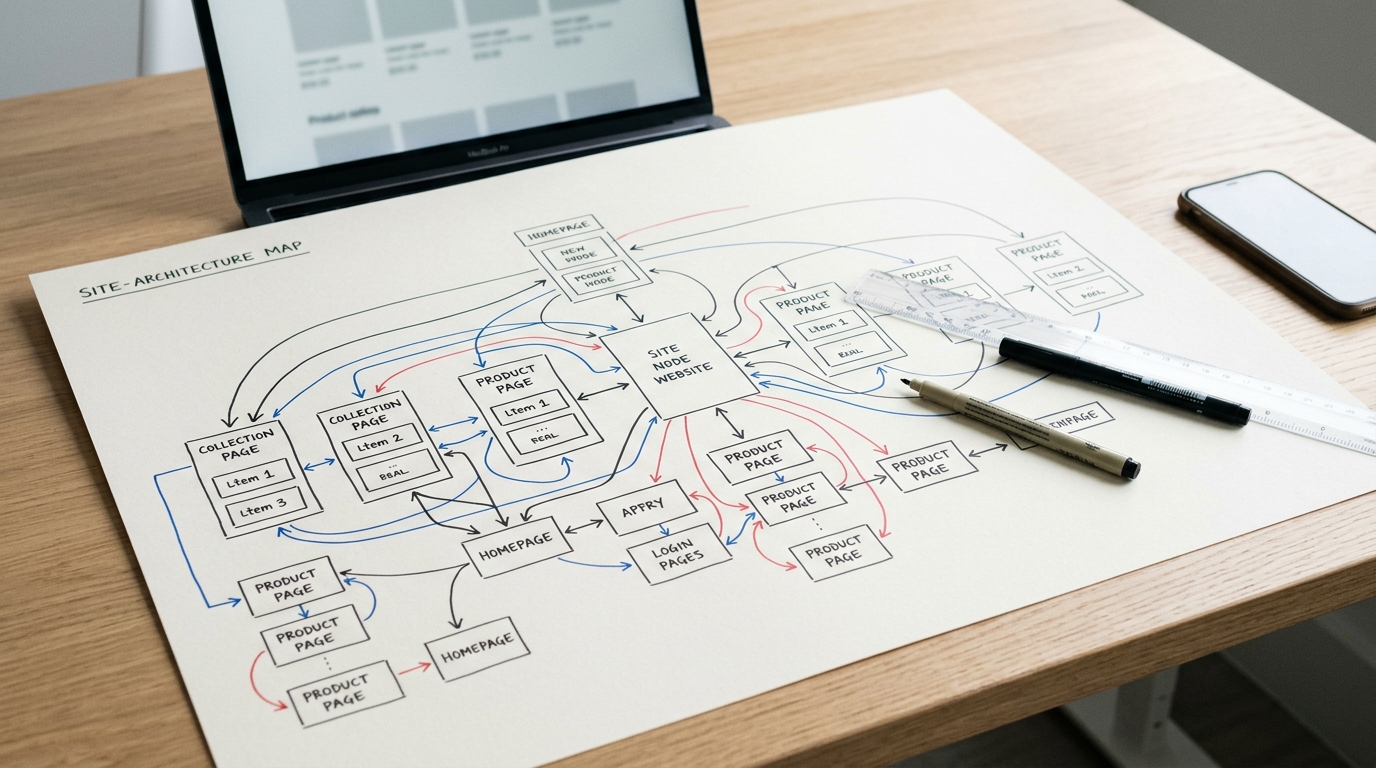
Shopify generates URLs, canonical tags, and sitemaps automatically, which is a head start. But the platform also creates specific technical challenges that other CMSs do not. The most common issues include duplicate content from collection and product URL paths, auto-generated /collections/all pages that dilute crawl budget, and paginated pages that confuse Googlebot when not handled correctly.
Understanding these platform-specific issues lets you fix them once and benefit permanently, rather than fighting ranking problems without knowing their source.
Technical SEO Fixes That Have the Biggest Impact on Shopify
Start with the issues that affect crawling and indexing before you touch content. Google cannot rank a page it cannot access or understand.
- Canonical tags: Shopify automatically adds canonical tags to product pages accessed through collection URLs. Verify these point to your preferred URL using a tool like Screaming Frog or Ahrefs Site Audit. Incorrect canonicals are the single most common Shopify indexing problem.
- Sitemap submission: Shopify generates a sitemap at
yourstore.com/sitemap.xml. Submit it to Google Search Console immediately after launch and recheck it after major catalog changes. - Page speed: Google's Core Web Vitals benchmarks weight Largest Contentful Paint (LCP) heavily. Compress images using Shopify's built-in WebP conversion or an app like TinyIMG. Remove unused app scripts that add render-blocking JavaScript.
- Redirect management: Every deleted product page that was indexed needs a 301 redirect to a relevant replacement. Shopify handles redirects natively under Online Store > Navigation > URL Redirects.
- Robots.txt: Shopify 2.0 themes allow robots.txt customization. Block cart, checkout, and account pages to preserve crawl budget for your product and collection pages.
Keyword Research Specifically for E-Commerce
E-commerce keyword strategy differs from blog or service-business SEO because purchase intent matters most. Target keywords fall into three categories: informational (someone learning), commercial (someone comparing), and transactional (someone ready to buy). Your product and collection pages should target transactional and commercial keywords. Blog content captures informational searches and feeds visitors into your purchase funnel.
Use Google Keyword Planner, Ahrefs, or Semrush to identify keywords with monthly search volume above 100 and a keyword difficulty score below 40 if your domain authority is below 30. Long-tail phrases like "handmade leather wallets for men under $100" convert at higher rates than broad terms like "wallets" and face far less competition.
Optimizing Shopify Product Pages for Organic Search
Each product page is a standalone ranking opportunity. Treat each one as a dedicated landing page with its own SEO strategy.
- Title tag: Keep it under 60 characters. Lead with the primary keyword. Example: "Stainless Steel Water Bottle 32oz | Brand Name"
- Meta description: Write 120–155 characters that include the keyword and a conversion incentive like free shipping or a return policy mention. Shopify's meta description field is found under each product's Search Engine Listing Preview.
- Product descriptions: Write at least 300 words of unique copy per product. Do not copy manufacturer descriptions. Include your target keyword naturally within the first 100 words and use related terms throughout.
- Image alt text: Describe the image using the product name and a relevant attribute. "Red ceramic coffee mug 12oz handmade" outperforms "image1.jpg" in both Google Image Search and accessibility compliance.
- Structured data: Shopify themes include Product schema by default in most cases. Validate yours with Google's Rich Results Test to confirm price, availability, and review markup render correctly. Rich snippets increase click-through rate by an average of 20–30% according to a 2024 Backlinko analysis.
Collection Page SEO: The Most Underused Opportunity in Shopify
Collection pages are category pages, and they rank for high-volume commercial keywords that individual products cannot capture alone. Most Shopify store owners leave collection pages nearly empty except for the product grid. This is a missed ranking opportunity.
Add 150–300 words of unique copy to the top or bottom of each collection page. Include your target keyword in the H1, the meta title, and naturally within the body text. For example, a collection page for "Women's Running Shoes" should include copy explaining the range, materials, and key benefits while using related phrases like "trail running shoes for women" and "lightweight running footwear."
Shopify Blog: Using Content to Build Topical Authority
Shopify includes a built-in blog under Online Store > Blog Posts. Use it. Publishing consistent, relevant content builds topical authority, which tells Google your store is a credible resource in your niche. A store selling kitchen equipment that publishes detailed cooking guides ranks more broadly than one that only lists products.
Aim for one to two posts per month at 800–1,500 words each. Internal linking is critical: every blog post should link to at least two relevant product or collection pages using descriptive anchor text. "Shop our cast iron skillets" beats "click here" every time for both SEO and user experience.
Link Building for Shopify Stores
Backlinks remain one of Google's top three ranking factors. For small Shopify store owners, the most practical link-building tactics are:
- Supplier and brand links: Ask manufacturers or distributors whose products you carry to link to your store from their "Where to Buy" pages.
- Local directories and chambers of commerce: If you operate in a specific region, local citations improve both local SEO and domain authority.
- Product reviews from bloggers and niche publications: Offer your product to relevant creators in exchange for an honest review with a link.
- Digital PR: A 2025 study by Moz found that e-commerce stores that earned even five to ten authoritative backlinks in their first year ranked on page one for target keywords 3x faster than those with no link strategy.
Shopify SEO vs. Paid Ads: A Practical Comparison for Small Businesses
| Factor | Shopify SEO | Google/Meta Paid Ads |
|---|---|---|
| Time to results | 3–6 months | Days to weeks |
| Cost per click | $0 (after investment) | $0.50–$5.00+ per click |
| Long-term value | Compounds over time | Stops when budget stops |
| Scalability | High with content volume | Limited by budget |
| Best use case | Sustainable revenue growth | Product launches, promotions |
| Skill requirement | Moderate, learnable | Moderate to high |
The most effective small business strategy combines both: use paid ads to generate immediate cash flow while SEO builds in the background. As organic traffic grows, reduce ad spend and reinvest in content and link building.
Tracking Shopify SEO Performance
Install Google Search Console and connect Google Analytics 4 to your Shopify store. Search Console shows which queries drive impressions and clicks. Analytics 4 shows which organic landing pages convert to sales. Review both monthly and track these four core metrics:
- Organic sessions (total and by page)
- Average position for target keywords
- Click-through rate by page
- Organic revenue and conversion rate
If your average position improves but click-through rate stays flat, the problem is your title tag or meta description, not your ranking. Optimize the copy and retest within 30 days.
Shopify SEO FAQ for Small Business Owners
How long does it take for Shopify SEO to show results?
Most Shopify stores see measurable organic traffic growth within 3–6 months of consistent SEO work. New domains with no backlink history typically take 6–12 months to rank competitively for commercial keywords. Technical fixes and on-page optimization deliver results faster than link building alone.
Does Shopify handle SEO automatically?
Shopify handles some technical SEO basics automatically, including sitemap generation, canonical tags, and SSL certificates. However, it does not write optimized title tags, meta descriptions, product copy, or build backlinks for you. The platform provides the foundation; you supply the strategy and content.
Should I use a Shopify SEO app?
Apps like Plug In SEO, SEO Manager, or TinyIMG handle specific tasks like alt text optimization, broken link detection, and image compression. They are useful supplements but do not replace a core SEO strategy. Free tools like Google Search Console and Ahrefs Webmaster Tools should be your first step before purchasing any app.
How do I avoid duplicate content issues on Shopify?
Shopify creates duplicate URLs when products appear in multiple collections. The platform automatically sets canonical tags to the primary product URL, which resolves the issue for Google in most cases. Confirm canonicals are pointing correctly using a site audit tool. Avoid creating near-identical product pages for minor variations; use Shopify's variant system instead.
What is the most important Shopify SEO task to do first?
Submit your sitemap to Google Search Console and fix any crawl errors before anything else. If Google cannot index your pages, no other SEO work will produce results. After confirming indexing is clean, prioritize title tag and meta description optimization across your top 10 product and collection pages.