AI SEO Tools & Workflows for Lean Teams: Get More Done With Less
AI SEO tools let small teams automate keyword research, content briefs, technical audits, and performance reporting - cutting manual work by 60–80% compared to traditional workflows. For lean teams of one to five people, the right AI-assisted stack means competing with larger brands without hiring a full SEO department.
This guide breaks down the specific tools, workflows, and decision points that help small business owners and compact marketing teams run effective SEO in 2026 - without burning out or blowing the budget.
Why AI SEO Matters More for Small Teams Than Anyone Else
Large enterprises have dedicated SEO analysts, content writers, and technical developers. You probably don't. AI levels the playing field by compressing the time between "we need to rank for this keyword" and "we published something that actually does it."
The real advantage isn't that AI does SEO better than experts - it's that AI does the repeatable, time-consuming parts faster, so your limited hours go toward strategy, local knowledge, and relationship-building that algorithms can't replicate.
The Core AI SEO Stack for Lean Teams (2026)
You don't need 15 tools. You need three or four that cover distinct functions. Here's a practical breakdown:
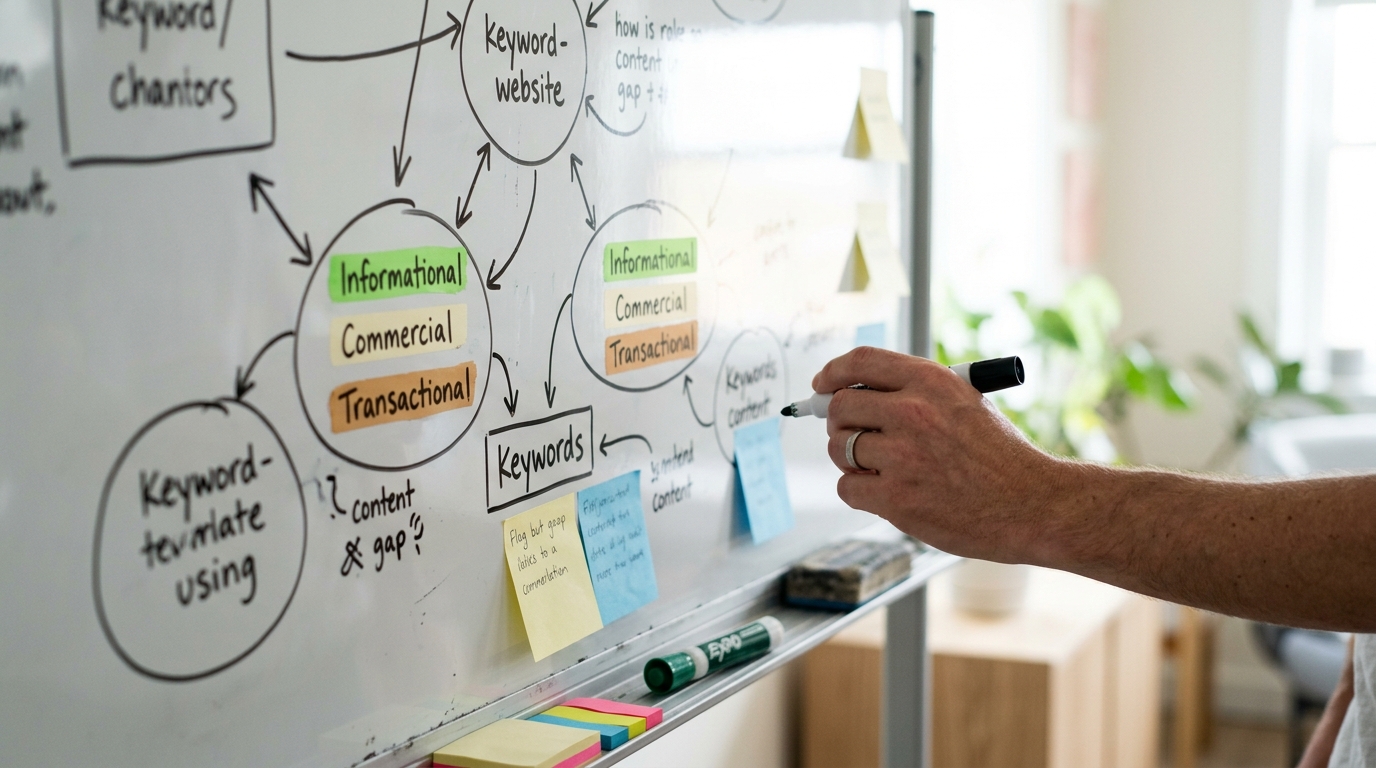
- Keyword & Intent Research: Semrush's AI Keyword Intent clustering, Ahrefs' AI-powered content gap reports, or Perplexity AI for conversational query mapping
- Content Brief & Outline Generation: Surfer SEO's Content Editor, Frase.io, or ChatGPT with structured prompts tied to your target SERP
- Technical Audit Automation: Screaming Frog with AI-assisted issue prioritization, or Sitebulb for visual crawl reporting
- Performance Monitoring & Reporting: Google Search Console paired with Looker Studio templates, or AgencyAnalytics for automated client-facing dashboards
- Schema & Structured Data: Schema App or Merkle's Schema Markup Generator - AI-assisted tagging speeds up FAQ, Product, and LocalBusiness markup deployment
AI vs. Manual SEO: A Direct Comparison for Small Teams
Task Manual Workflow AI-Assisted Workflow Time Saved Keyword Research (50 terms) 3–4 hours 30–45 minutes ~80% Content Brief Creation 1–2 hours 10–15 minutes ~85% Technical Audit (100-page site) 4–6 hours 45–60 minutes ~85% Monthly SEO Report 2–3 hours 15–20 minutes ~88% Internal Link Mapping 2 hours 20–30 minutes ~75%A Practical AI SEO Workflow for a Two-Person Team
Here's how a realistic weekly SEO workflow looks when you build around AI tools rather than around headcount:
- Monday (30 min) - Query & Opportunity Scan: Pull new Search Console data. Use Semrush's AI clustering to identify 3–5 keywords where you rank on page two (positions 11–20). These are your fastest-win targets.
- Tuesday (45 min) - Brief Generation: Feed your target keyword into Frase or Surfer SEO. Generate a content brief with recommended headings, word count, semantic terms, and competitor gaps. Review and edit for brand accuracy - AI briefs often miss local or niche context.
- Wednesday–Thursday - Content Execution: Write, edit, or use your AI assistant to draft content against the brief. For ecommerce teams on Shopify, BigCommerce, or WooCommerce, this also includes updating product and category page copy.
- Friday (20 min) - Publish & Tag: Deploy the content, add structured data markup, update your internal link map, and log the URL in your rank tracker. Set a 30-day review reminder.
That full cycle takes roughly 2–3 hours of actual work per piece - compared to 8–12 hours using manual methods. For a two-person team, that's the difference between publishing two pieces a month and publishing eight.
Where AI SEO Falls Short (And What You Need to Supplement)
AI tools are strong at pattern recognition and speed. They're weak at three critical things:
- Local and niche accuracy: AI keyword tools don't know that "best pizza near downtown Phoenix" performs very differently than a regional competitor targeting "Phoenix pizza delivery." Always validate with local data.
- Brand voice and E-E-A-T signals: Google's Helpful Content guidelines reward first-hand experience and demonstrated expertise. AI-generated drafts need human editing to add real stories, specific data, and genuine perspective.
- Link building: No AI tool can replace the relationship-driven work of earning quality backlinks. AI can identify link opportunities; humans have to close them.
AI SEO for Ecommerce: Platform-Specific Notes
Platform choice affects how easily you can deploy AI-assisted SEO improvements:
- Shopify: Apps like SEO King and Yoast for Shopify automate meta tag generation and alt text. Shopify's structured data support is strong for Product schema out of the box.
- BigCommerce: Built-in SEO features are robust, but bulk editing through the API allows AI-assisted mass optimization of product descriptions - a significant time saver for stores with 500+ SKUs.
- WooCommerce: The Rank Math plugin integrates AI-assisted content analysis natively. The open-source flexibility also means you can pipe in custom AI workflows via Zapier or Make.
Building an SEO Foundation Before You Add AI Campaigns
AI-assisted campaigns work best on a technically sound website. Before you invest in ongoing SEO tooling, make sure your site has clean crawlability, fast Core Web Vitals scores, correct canonical tags, and a properly structured sitemap. This is what's called an SEO foundation- and it's the prerequisite for everything else. Ongoing AI SEO campaigns built on top of a broken technical foundation produce poor results regardless of how smart the tooling is.
If you're on a platform like WorkspaceCMS, the SEO foundation is built into every website plan, with ongoing SEO and AI-driven campaigns available as a separate add-on when you're ready to scale.
Measuring What Your AI SEO Workflow Actually Produces
Track these four metrics monthly to evaluate whether your AI-assisted workflow is paying off:
- Impressions growth in Search Console- measures whether your content is entering Google's index and matching queries
- Position movement on target keywords- week-over-week rank changes on the terms you're actively optimizing
- Organic click-through rate (CTR)- AI-generated meta descriptions often underperform; monitor and rewrite titles/descriptions that fall below 3% CTR
- Assisted conversions from organic- revenue or lead attribution from organic traffic in Google Analytics 4
AI SEO Tools For Lean Teams FAQ
Do AI SEO tools replace the need for a human SEO strategist?
No. AI tools handle repeatable, data-heavy tasks faster than any human - keyword clustering, brief generation, technical audits. Strategy decisions - what markets to target, which content serves your customers best, how to build authority in your niche - still require human judgment. Lean teams use AI to free up strategist time, not eliminate it.
What's the minimum budget needed for an AI SEO tool stack in 2026?
A functional lean-team stack - Ahrefs Starter or Semrush Pro, Frase or Surfer SEO, and a rank tracker - runs roughly $150–$250 per month combined. Google Search Console, Google Analytics 4, and Screaming Frog's free tier add zero cost. Most teams start with Search Console plus one paid content optimization tool and expand from there.
How does AI SEO apply to local businesses specifically?
For local businesses, AI tools are most valuable for Google Business Profile optimization, review response drafting, and local landing page content at scale. Tools like BrightLocal use AI to surface local citation gaps and competitor map-pack signals. Always pair AI recommendations with manually verified local keyword data - automated tools regularly miss hyperlocal intent nuances.
Is AI-generated content safe to use for SEO in 2026?
Google's current guidance evaluates content based on helpfulness, accuracy, and E-E-A-T signals - not whether AI was used to produce it. AI-generated content that is accurate, well-edited, and demonstrates real expertise performs well. Thin, unedited AI output that adds no value does not. The production method matters less than the quality of the final result.
How do I know if my ecommerce site needs a technical SEO audit before adding AI content tools?
Run a free crawl with Screaming Frog (free up to 500 URLs) or Google Search Console's Coverage report. If you see more than 5% of your indexed pages returning 4xx errors, duplicate content warnings, or missing meta tags, fix the technical foundation first. AI content tools will not improve rankings on a site Google is struggling to crawl correctly.